
Care and evidence
Skilled people, measurable outcomes
Ashford House combines staffing matched to each person with a team trained before day one and outcomes that commissioners and families can see.
Our care model
- Staffing matched to each person, typically one-to-one by day.
- Two waking staff every night.
- An experienced registered manager and a Positive Behaviour Support practitioner.
- Access to occupational therapy, speech and language therapy and psychology.
- Oliver McGowan and restraint reduction training for every member of staff.
What we report to Kent
- Restrictive practice, driven towards zero
- Incidents and the patterns behind them
- Sleep, wellbeing and personal goals
- Community participation
- Placement stability
Shared with commissioners and families, with consent.
Evidence, not claims
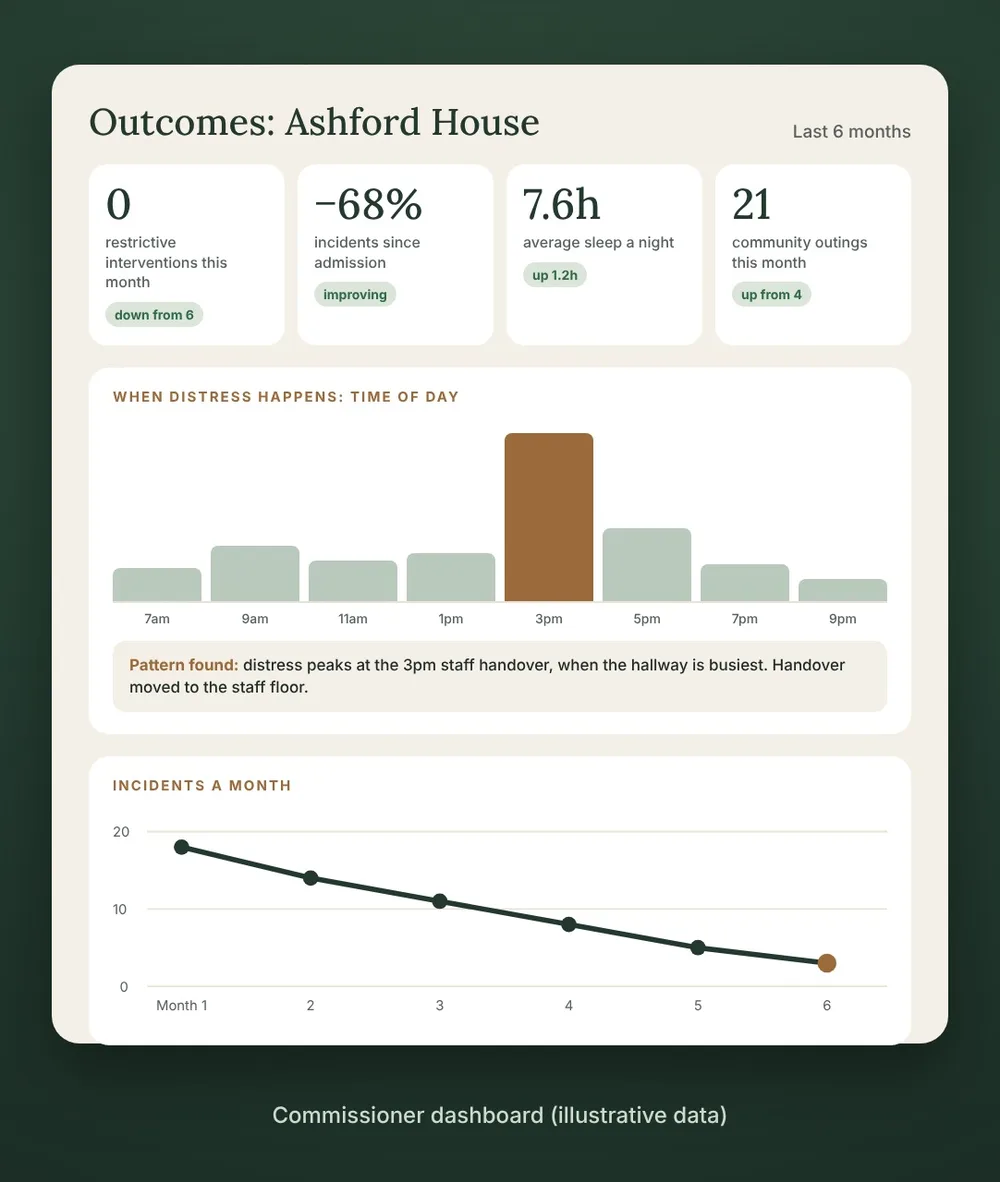
Patterns behind distress, made visible
The same system that runs the home records what matters: when distress happens, what was going on around it and how each person's life is changing over time.
That evidence supports Positive Behaviour Support plans, guides staffing and gives Kent a clear view of outcomes for every placement.
Our people
Trained before day one, developing every year
Before anyone works alone
- Care Certificate induction
- Oliver McGowan Mandatory Training on Learning Disability and Autism
- Restraint Reduction Network certified training in positive behaviour support
- Safeguarding adults, Mental Capacity Act and Deprivation of Liberty Safeguards
- Medication competency, epilepsy and rescue medication, first aid and fire safety
- Shadow shifts and an introduction to each resident's sensory profile and support plan
Recognised qualifications
- Support workers: Level 2 then Level 3 Diploma in Adult Care
- Shift leads: Level 3 Diploma and lead practitioner training
- Registered manager: Level 5 Diploma in Leadership and Management for Adult Care
- PBS practitioner: accredited positive behaviour support qualification
- Communication: Makaton, PECS and Intensive Interaction
- Neurodiversity: lived-experience-led training from Calling All Minds
Learning that never stops
- Monthly one-to-one supervision and an annual appraisal
- Reflective practice and a structured debrief after every incident
- Refresher training tracked for every person, never allowed to lapse
- Monthly team learning sessions in our on-site training room
- Clear progression: support worker, shift lead, deputy, manager
- Workforce development shaped by Ravi Sharma's Outstanding-rated practice
Staff welfare
Looking after the people who care
Calm staff make a calm home. Ashford House gives its team a whole floor of their own, protected breaks and support after difficult moments.
- A dedicated staff floor: staff room with kitchenette and lockers, away from residents' spaces.
- Protected breaks on every shift, with cover planned into the rota.
- Time to decompress after an incident, with a debrief and a quiet place to recover.
- Confidential wellbeing support through an employee assistance programme, available around the clock.
- Rotas published in advance and consistent teams, so staff and residents know each other.
- Technology that lightens the load: sensors replace hourly night checks, digital care notes cut paperwork.
- Staff parking on site at the rear of the property.
Second floor: the staff and clinical floor
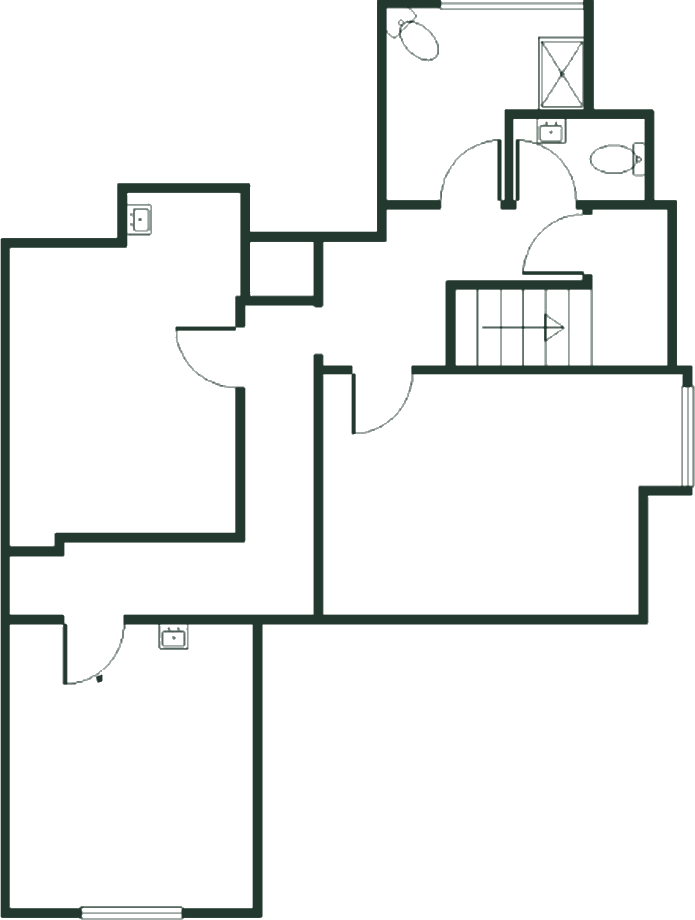
- Room 10: Staff room
- Room 11: Manager and clinical office
- Room 12: Training and meeting room
Talk to us about a placement
We would welcome a conversation with Kent's commissioners about the people Ashford House is built for.